Who Siversa is presenting
Inácio Sumbane is a Mozambican software engineer, founder and chief architect of SiversaERP. He brings engineering, product and marketing into the same craft, with ongoing work in ERP and payments, and a postgraduate degree in Psychology focused on human behaviour and mental resilience. The company confirms the essentials: more than twelve years writing systems that have to survive a queue at the counter, a power cut and a tax inspection.
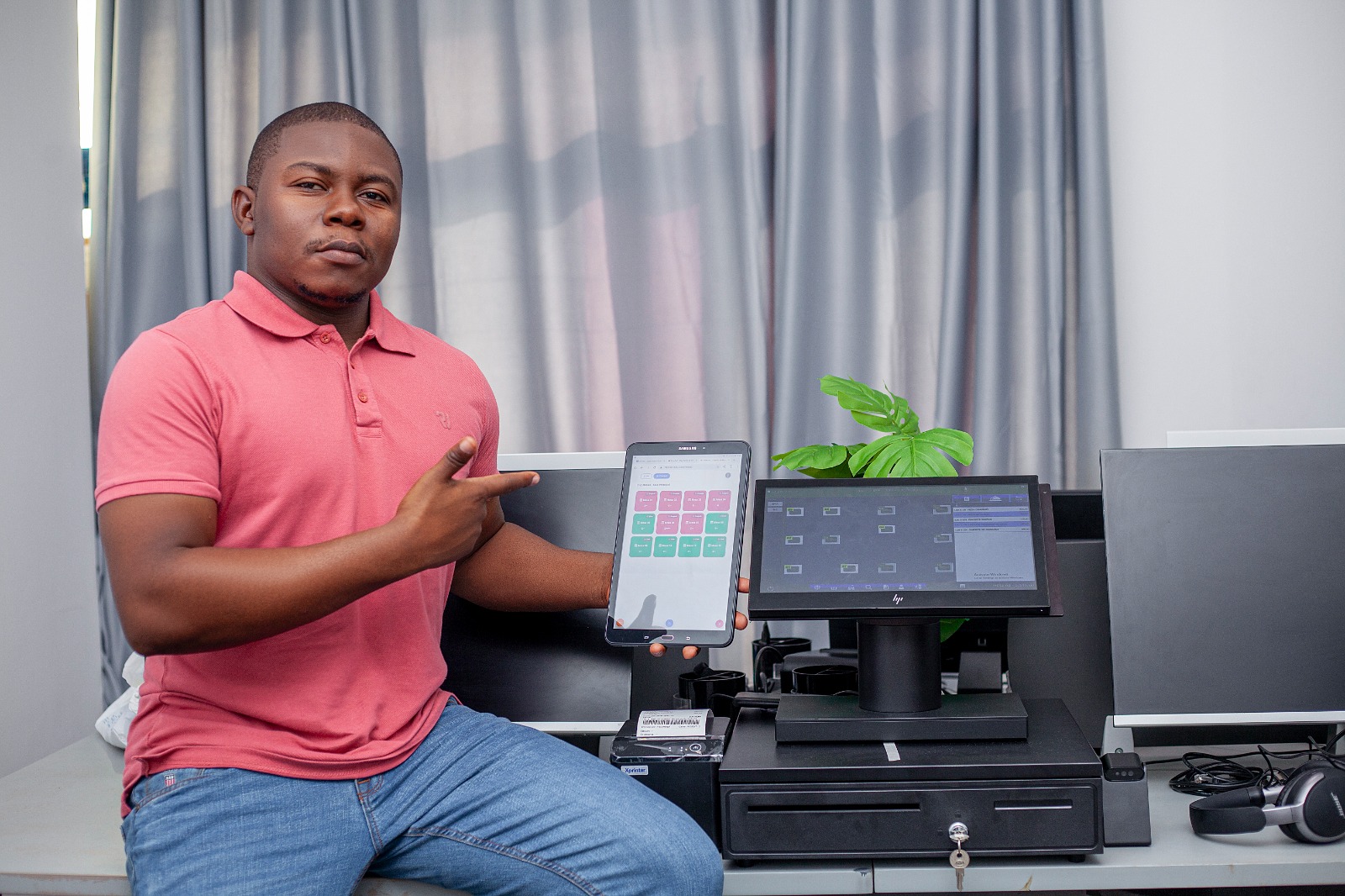
The craft began in Nampula, at Moz Sistemas, and in the group now called Sumbanix Software Group, where he is engineer and general manager. He is also founder of Grupo PixMoz and, since July 2025, Chief Technology Officer of 3SIX Business Solutions, announced by 3SIX itself. Before that he served as executive president of ITCORE GROUP. In public, the line is short: strategy, silence, discipline.
In 2017 he connected payment by reference to the collection of school fees and charges: the institution issues the reference, the guardian pays on the channel they already use, the system reconciles without a queue at the treasurer. On the same thread of work he integrated mobile-wallet APIs, among them M-Pesa and M-Mola, so the money enters the ERP and the till without the operator copying receipts by hand.
When software understands the context, the company stops fighting the tool and focuses on the business.
Inácio Sumbane, quoted by Siversa
Path, from the diploma to the ecosystem
The base qualification is a bachelor's degree in Computer and Telecommunications Engineering at Universidade Politécnica, in Maputo. The rest was learned on the ground. The public profile marks November 2015 as the start of Siversa ERP: architecture, product and engineering under the same hand. The desktop version the market still recognises consolidated from 2018, with invoicing, treasury, restaurant and hospitality, built beside operators who had no patience for translated screens.
Software engineering at Moz Sistemas, Nampula, in what would become Sumbanix Software Group.
Founding of Siversa ERP. Architecture, product strategy and code at the same table.
Legacy desktop (Siversa v2) in invoicing, treasury, restaurant and hospitality. Modular expansion requested by clients in Maputo, Nampula, Beira and Pemba.
SiversaERPv4 in the cloud: Remote multi-tenant, WPF POS, CRM Admin and MySiversa portal, manuals and public sites.
General management of Sumbanix Software Group. CTO at 3SIX Business Solutions. Continuity of GraduadoERP for education institutions.
In Mozambique, business management still runs on packages licensed abroad or by spreadsheets nobody reconciles. Sumbane's thesis was another: a national ERP with the depth of a large system, written for the metical, the NUIT and the pace of the counter.
What the company means by .NET specialist
.NET is Microsoft's platform for long-lived software: a virtual machine (CLR), a class library and languages, chiefly C#. It is not a shortcut for a web page. It is where you build systems that have to live ten years without being rewritten from scratch.
In Sumbane's work that becomes three surfaces. In the back office, ASP.NET MVC on the .NET Framework, with Remote tenants, Forms session, privileges per module and a decimal binder that accepts the JavaScript point without zeroing the metical when the page culture is pt-PT. At the till, WPF for SiversaPOS: a Windows client, SQLite persistence in Standalone, the shop's SQL Server in the Pro edition, zero secret keys embedded in the executable. Underneath, SQL Server in the ERP and CRM, with schema treated as a contract, not as a detail Entity Framework invents.
The same discipline appears in digital payments, APIs and, in other group projects, ticketing and public-facing platforms. The point is not to collect acronyms. It is to keep a runtime common enough for the ERP, POS and CRM to speak the same language without sharing the same trust boundary.
The ecosystem he designed
Anyone who looks only at the site sees a cloud ERP. Anyone who looks at the solution sees a family. Sumbane treats each piece as a product, not as an annex.
SiversaERP v4 Web
Sv4Cloud back office. Invoicing, stock, treasury, accounting, logistics, hospitality and sector modules. Remote multi-tenant: each company with its connection string on the request, partitioned caches, CRUD privileges and fine-grained actions.
SiversaPOS
WPF client for the counter. Standalone on SQLite, Pro with the shop SQL. Licence, payment and updates go through the CRM, never through the ERP connection string. There is a waiter client on the LAN and a release pipeline with ConfuserEx.
Siversa v2 Desktop
The legacy Manager Desktop, still alive in installations that have not migrated. It is proof the product was not born in the cloud: it was born at the till, with real operators, and then it climbed.
CRM Admin and MySiversa
Two planes on the same site, mutually exclusive cookies. Admin manages tenants, POS licences, proofs of payment and the catalogue. MySiversa is the customer portal: account, subscription, billing and company services.
Sumbanix CodeBot
Modelling studio. The SQL schema is the source of truth. CodeBot exports the manifesto, canonical and migrations; the ERP consumes the export; the operator applies it on the tenant. Code and database do not drift because someone was 'already here'.
Sites and manuals
www.siversa.co.mz, the POS landing, crm.siversa.co.mz, on-screen manuals for the ERP and the POS. The public voice and the operator voice come from the same product mind.
How the platforms speak to each other
Integration, in Sumbane's design, is a contract, not a shortcut. The till does not open the ERP database. SiversaPOS authenticates licence and updates on the CRM, over HTTPS, with an RSA challenge on the device. The web ERP resolves the tenant on the request and isolates session, cache and documents. The supplier invoice and the goods receipt meet in the logistics process, but the GRN does not invent an accounts-payable record. Desktop v2 stays apart until there is a cutover.
In the CRM, admin and MySiversa do not share the same browser as if they were the same person: signing into one plane expires the other cookie. On the POS, check-in is opportunistic; the hard block comes from licence validity, revocation and tamper, not from fifteen days without internet. Anyone who reads this as a feature catalogue is mistaken. It is a map of boundaries.
The security doctrine
Sumbane writes security as a refusal of theatre. In the ERP, privilege is not a loose if
lost in a controller: it is catalogue, seed and fail-closed. Money rounds to two places
on screen, in validation and in persistence, so the operator does not live one number and the database another.
Tenants do not share a process cache. Cookies of distinct planes do not both stay
valid. None of this is announced as 'impenetrable'. It is announced as verifiable.
In SiversaPOS the executable is assumed to be decompilable. That is why it carries no API keys, HMAC or a privileged connection string. Licence authority lives on the server. The client keeps a DPAPI-protected lease and a watermark against clock and downgrade. ConfuserEx obfuscation raises the cost of reading; it does not replace check-in. In the trial, the sales ceiling lives in the watermark, not in a comment in the code.
The line he published on LinkedIn serves as the epigraph of this section: 'Permission is not a stray if in the Controller. It is architecture.' Siversa adopts it as a house rule.
Sumbanix CodeBot, the factory he designed
Some founders design the product and leave the schema to chance. Sumbane did the inverse: he invented a tool so the data model would command the code. Sumbanix CodeBot (SumbanixCodebotweb) is where the entity is saved, the batch is exported and the migration is applied on the tenant. The manifesto carries a checksum. The ERP does not 'align' the disk by hand. If the checksum fails, you re-export. You do not paint the JSON.
This is automation with character. Generating code without a contract is debt. Generating code from a versioned schema, with the operator applying the SQL, is how a single architect keeps an ERP of dozens of modules without the model coming apart. CodeBot does not replace judgement. It multiplies the hand that already knows what it must not invent.
Professional CV, in a line
Public roles crossed with LinkedIn and with company announcements. Dates follow the public profile.
Public references
Open sources to cross-check roles, companies and products. Direct contacts sit in the card beside this page.
The ecosystem modules
In the back office, the modules share the same database. The POS is another station: the sale stays in the shop; licence and updates go through the CRM. There is no shortcut to the ERP connection string.
Issue invoices, receipts, credit notes and proformas with sequential numbering, customer history and tax compliance.
Point of sale for shops, restaurants and counters. Its own Windows client: licence and updates on the CRM. It does not open the ERP database.
Sales pipeline, leads, opportunities, activities and customer contact history, aligned with invoicing.
Cash flows, accounts payable and receivable, treasury and a clear view of what comes in, goes out and remains available.
Chart of accounts, entries, trial balances and accounting reports aligned with commercial operations.
Suppliers, orders, goods receipt and purchase control from order to payment.
KPIs, dashboards and management reports to decide based on up-to-date figures, not estimates.
Products, warehouses, batches, prices and movements. Know what you have, where it is and what it is worth.
Deliveries, routes, dispatch and tracking of goods from warehouse to customer.
Vehicles, maintenance, consumption and management of own or outsourced transport.
Production orders, raw materials, processing and factory control integrated with stock.
Planning, tasks, deadlines and execution for service companies, construction or consulting.
Health, safety at work and compliance. Records, incidents and legal obligations organised.
Employees, permissions, attendance and HR processes linked to operations.
Petrol station management: pumps, tanks, shifts and sales reconciliation.
Bookings, rooms, reception and integrated invoicing for accommodation units.
Schedule, patients, consultations and clinical invoicing in one continuous flow.
Students, classes, fees and institutional management for schools and training centres.
Cases, clients, deadlines and fees for law firms.
Laundry order management, items, service status, deliveries and invoicing integrated with customers and cash.
Microcredit management: customers, contracts, instalments, collections and portfolio tracking, aligned with treasury.
Gym management: members, membership plans, check-in, classes and invoicing integrated with customers and cash.
Why the company publishes this profile
Anyone who chooses a management system deserves to know who designed it. Siversa publishes this portrait in the third person so the founder's voice is not mixed with the product's voice. The work remains his. The duty of describing it belongs to the house.
If the company is looking for a national, modular platform ready to grow, view the plans or get in touch. For electronic invoicing with the Tax Authority, the compliance article by Santos Lemane covers the go-live notice, the descriptive memorandum and the monthly communication to the Tax Authority.